How Much Muscle Are You Losing on Ozempic?
The Short Answer
GLP-1 medications like semaglutide work. They produce significant, sustained weight loss that most people cannot achieve through diet alone. But roughly 39% of the weight lost on semaglutide in the landmark STEP 1 trial was lean body mass, not fat. That includes water, organ tissue, and muscle. The good news: resistance training combined with high protein intake appears to protect lean mass while on these drugs. The evidence is still early, but the direction is clear.
39% of What You Lost Was Not Fat
The STEP 1 trial enrolled 1,961 participants on semaglutide 2.4mg for 68 weeks. Average weight loss was approximately 15% of body weight. Impressive by any historical standard for a pharmaceutical intervention.
The composition of that weight loss is where the conversation gets important. Roughly 39% of the total weight lost was lean body mass. The rest was fat.
Before you panic: lean body mass is not the same thing as skeletal muscle. It includes intracellular water, connective tissue, and organ mass. Some lean mass loss during significant weight loss is physiologically expected. Your body needed more supporting tissue when it was heavier. As weight drops, some of that tissue goes with it.
The problem is that STEP 1 did not require exercise. Most participants were sedentary. So we are looking at the worst-case scenario for muscle: heavy pharmaceutical weight loss with no resistance stimulus to tell the body to keep its muscle.
GLP-1 Drugs Do Not Specifically Target Muscle
A 2026 study published in Cell Reports Medicine examined both pre-clinical data and a proof-of-concept clinical trial to answer a specific question: do GLP-1 receptor agonists disproportionately harm muscle tissue?
The answer appears to be no. GLP-1 medicines slightly decreased absolute muscle values, which is expected during any significant weight loss, but they did not selectively damage muscle function. In fact, the study found positive impacts on body composition and mobility overall. People moved better. Their ratio of fat to lean tissue improved even though absolute lean mass decreased.
This matters because the social media narrative around semaglutide and muscle is often catastrophic. The framing is usually: "Ozempic eats your muscle." The data so far does not support that framing. What it supports is that significant weight loss, by any method, will include some lean mass loss unless you actively counteract it.
Important caveat: these studies were conducted in obese populations. Results may differ for people closer to a healthy weight who are using GLP-1 medications off-label.
Resistance Training Changes the Equation
Early evidence from a 2026 case series published in PMC followed patients on semaglutide and tirzepatide who also performed regular resistance training. Some of these patients maintained or even increased their lean mass while losing significant body fat.
This is preliminary data. Small sample, no control group, multiple confounders. But it aligns with decades of resistance training research in other weight-loss contexts: lifting weights sends a strong signal to the body that muscle tissue is needed and should not be broken down for energy.
The pattern is consistent across the literature. Caloric deficit plus no training equals lean mass loss. Caloric deficit plus resistance training equals fat loss with muscle preservation. GLP-1 medications create a caloric deficit through appetite suppression. Adding resistance training applies the same protective mechanism.
- ~39% of weight lost is lean mass
- Muscle function declines with weight
- Higher risk of sarcopenic physique
- No stimulus to preserve tissue
- Early data shows lean mass can be maintained
- Strength and mobility tend to improve
- Body composition shifts toward muscle
- Training signals the body to keep muscle
What to Do If You Are on a GLP-1 Medication
This is not medical advice. Talk to your prescribing physician before making changes to your exercise or nutrition plan. But the research points in a clear direction.
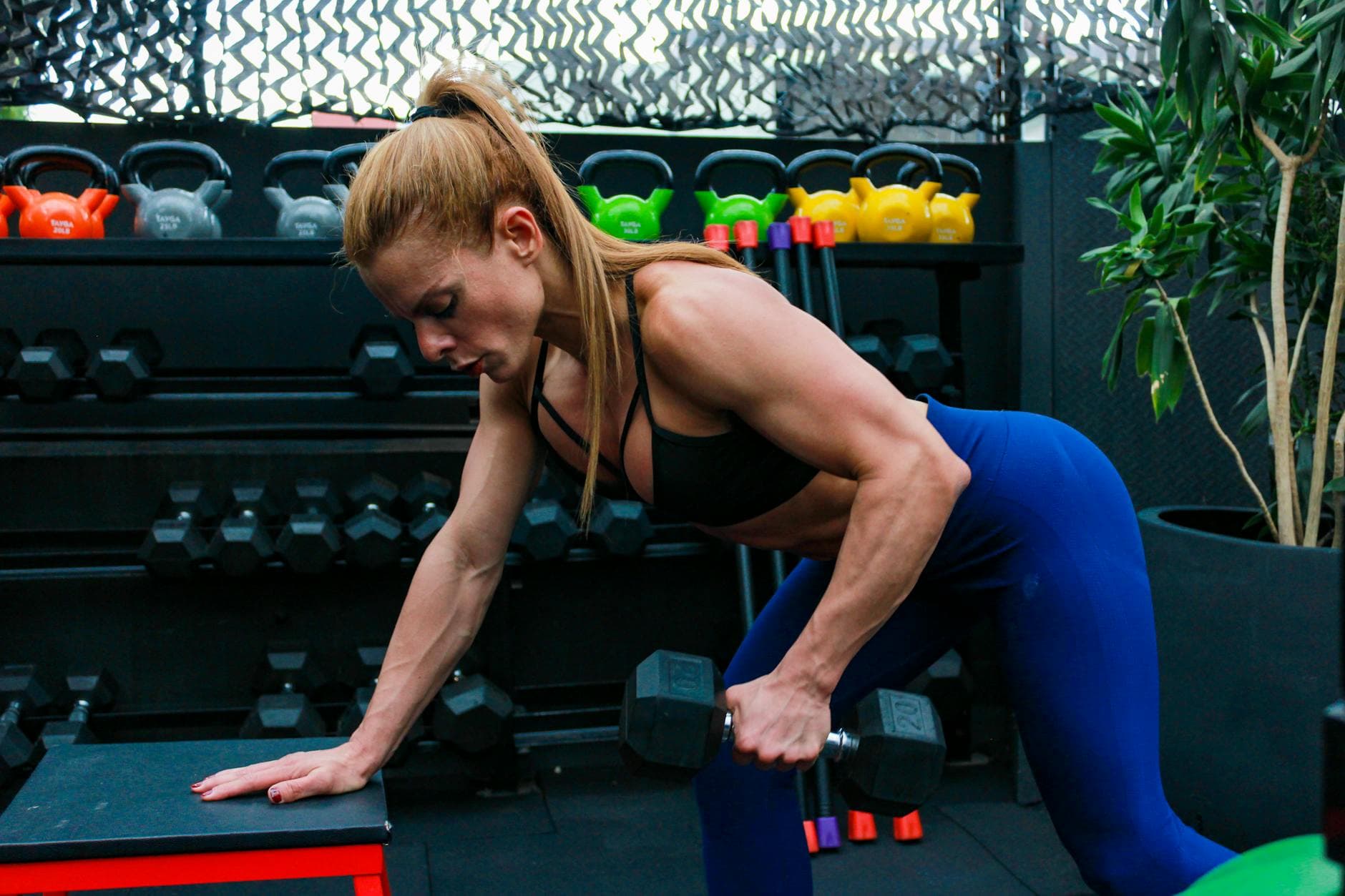
Train with resistance 3-4 times per week. Compound movements like squats, deadlifts, rows, and presses give you the strongest muscle-preservation signal. Machines work too. The mechanism is mechanical tension on muscle tissue, not the specific equipment.
Eat high protein. Aim for 1.6 to 2.2g per kilogram of body weight daily. GLP-1 drugs suppress appetite significantly, which makes hitting protein targets harder. Many patients find it easier to prioritize protein early in the day and use shakes or high-protein snacks to fill gaps. If nausea limits your intake, work with your prescribing physician or a dietitian to find foods you can tolerate.
Do not skip meals entirely. Appetite suppression can make it tempting to eat once a day. Your muscles need a consistent supply of amino acids. Spreading protein across 3-4 meals matters more when you are in a large caloric deficit.
Track your body composition, not just weight. The scale cannot tell you whether you lost fat or muscle. A DEXA scan every 8-12 weeks, or even consistent waist and limb measurements, gives you a much more useful picture than bodyweight alone.
The Bigger Picture on GLP-1 Medications
These drugs represent a genuine advance for people with obesity. The weight loss is substantial, sustained, and associated with reduced cardiovascular risk. The metabolic benefits are real. Dismissing them because of lean mass concerns would be a mistake.
The lean mass question is a solvable problem. It requires specific action, not abandoning the medication. Resistance training and adequate protein are not complicated interventions. They are well-understood, accessible, and effective.
The people who will get the best outcomes from GLP-1 therapy are the ones who combine it with strength training. Full stop.
GLP-1 medications cause real lean mass loss, roughly 39% of total weight lost in the STEP 1 trial. But this is not inevitable. Resistance training 3-4 times per week and protein intake of 1.6-2.2g/kg daily appear to protect muscle. If you are on semaglutide or tirzepatide, start a structured lifting program this week. Consult your prescribing physician before making changes to your routine.
About Be Fit and Strong Evidence-based fitness coaching for busy professionals in Dubai. We filter the research so you don't have to.
On a GLP-1 medication and want a training plan built around muscle preservation? See how online coaching works.