Three Supplements Work. The Rest Is a $50 Billion Marketing Machine.
The supplement industry is worth over $50 billion globally. Most of that money goes to products that do absolutely nothing for you. Pre-workouts, fat burners, testosterone boosters, BCAAs, greens powders, "GLP-1 support" capsules. I've watched clients walk into consultations with supplement stacks that cost more per month than their gym membership.
This article is a filter. Three things work. The rest is marketing. I'll show you the evidence for each so you can make the call yourself.
Tier 1: Worth Your Money
These have decades of evidence. Not marketing studies funded by the companies selling them. Independent, peer-reviewed, replicated research.
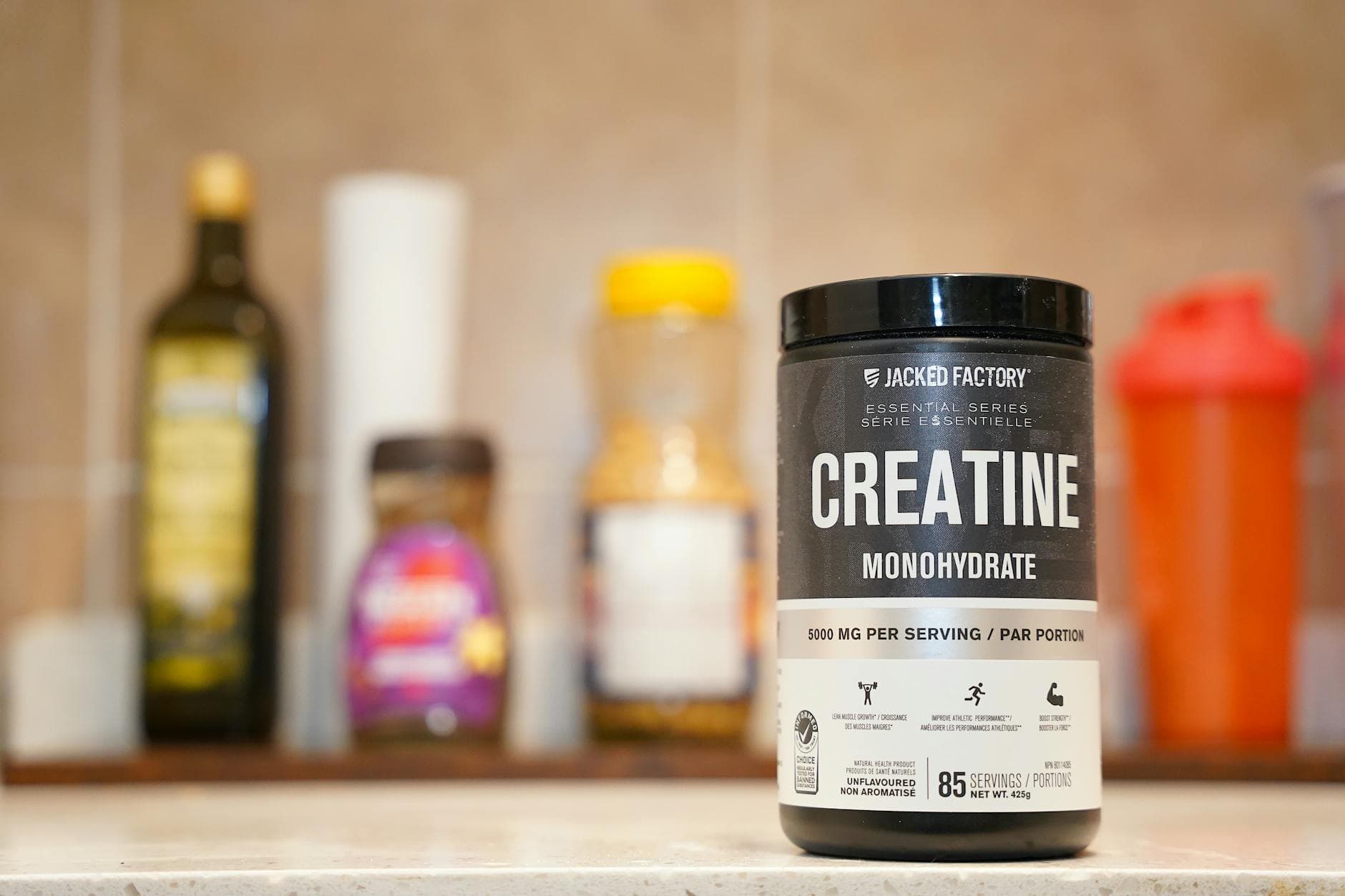
Creatine Monohydrate
This is the most studied sports supplement in history. Over 500 studies. The evidence isn't ambiguous.
A 2024 meta-analysis of adults under 50 found that creatine combined with resistance training increased upper-body strength by an average of 4.43 kg and lower-body strength by 11.35 kg compared to placebo. That's not a rounding error. That's meaningful.
How to take it: 3-5 g daily. That's it. No loading phase. No cycling. No specific timing. Just 3-5 g every day, forever. Creatine monohydrate is the form you want. Not creatine HCl, not buffered creatine, not creatine ethyl ester. Monohydrate. It's also the cheapest.
Cost: roughly $0.08 per day if you buy a 500g tub.
Caffeine
You're probably already taking this. Coffee before training is a legitimate performance enhancer, not a habit you need to justify.
Caffeine at 3-6 mg per kg bodyweight consistently improves strength output by 3-7% and endurance performance by a similar margin. For a 80 kg person, that's 240-480 mg, or about 2-4 cups of coffee.
The catch: timing and dosage matter. Take it 30-60 minutes before training. And if you train after 2 PM, keep the dose moderate or you'll pay for it with worse sleep tonight. Caffeine has a half-life of 5-6 hours. A 300 mg dose at 4 PM means 150 mg still circulating at 10 PM.
Cost: the cost of coffee you're already buying.
Protein Powder (Conditional)
Protein powder isn't a performance supplement. It's food in convenient form. I include it here because for some busy professionals, it's the difference between hitting their protein target and falling 40 g short.
If you can get 1.6-2.2 g/kg daily from food, you don't need powder. But if you're a consultant flying Dubai to London twice a month, or an executive whose mornings start with back-to-back meetings instead of breakfast, a scoop of whey in a shaker bottle closes the gap between your target and reality.
Don't overthink the brand or type. Whey, casein, plant blend, whatever you can stomach. The research doesn't show meaningful differences between protein sources for muscle growth when total daily intake is matched.
Cost: $1-2 per serving.
| Supplement | Evidence | Monthly cost | Verdict |
|---|---|---|---|
| Creatine monohydrate | 500+ studies, moderate effect size | $2.50 | Take it |
| Caffeine (coffee) | Consistent 3-7% strength improvement | $5-15 | You probably already do |
| Protein powder | Convenient protein, not magic | $30-60 | Only if diet falls short |
| BCAAs | 12-study review: zero benefit | $25-40 | Redundant if eating protein |
| Fat burners | Caffeine in expensive packaging | $30-50 | Drink coffee instead |
| Testosterone boosters | 75% of products: zero data | $40-60 | See a doctor if concerned |
| Pre-workout | Caffeine works, rest is filler | $30-50 | Coffee does the same thing |
Tier 2: Conditional. Check Before You Buy.
Vitamin D: Get tested first. If you're a Dubai professional spending all day in AC, deficiency is surprisingly common despite the sunshine. Below 30 ng/mL? Supplement 2,000-4,000 IU daily. Above 30? Skip it.
Omega-3: Eat fatty fish twice a week and you probably don't need it. Never eat fish? Might be worth adding. Small effects, mixed research. Low priority.
Magnesium glycinate: Cheap, low-risk. If you're sleeping poorly despite good habits, it might help. Don't expect transformation. Expect maybe slightly better sleep onset.
Tier 3: Stop Buying These
BCAAs (Branched-Chain Amino Acids)
Twelve studies. Pooled together in a systematic review. The conclusion: zero benefit of BCAA supplementation on performance, strength, or muscle mass.
Here's why: BCAAs are three of the nine essential amino acids. They're found in every complete protein source. Chicken, eggs, fish, whey, dairy, even legumes. If you're eating adequate protein (1.6+ g/kg), you're already getting more BCAAs than any supplement provides.
The studies that showed BCAA benefits? Most used subjects eating inadequate protein. Fix the diet. Don't patch it with a $30/month supplement.
| Food | Serving | Total protein | BCAAs included |
|---|---|---|---|
| Chicken breast | 200g | 46g | ~8g BCAAs |
| Whey protein scoop | 30g scoop | 25g | ~5.5g BCAAs |
| Eggs (3 whole) | 3 large | 18g | ~3.5g BCAAs |
| Greek yogurt | 200g | 20g | ~4g BCAAs |
| BCAA supplement | 1 scoop | 0g protein | 5-7g BCAAs |
Look at that last row. The BCAA supplement gives you three amino acids without the rest of the protein. That's like buying a car door and expecting it to drive.
Fat Burners
Caffeine pills in fancy packaging. The caffeine works (see Tier 1). Everything else in the bottle (green tea extract, CLA, L-carnitine, capsaicin) has either no evidence or effects so small they're clinically irrelevant. Drink coffee. Save $40/month.
Testosterone Boosters
The most dishonest category in the industry. When researchers reviewed the claims, only 24.8% of testosterone booster products had any data supporting their testosterone claims. Not strong data. Any data at all.
The popular ingredients: D-aspartic acid showed null or negative effects on testosterone in trained men. Tribulus terrestris, fenugreek, ashwagandha? Either null results or effect sizes so small they produce zero measurable change in muscle, strength, or body composition.
If your testosterone is genuinely low, that's a medical issue. See a doctor. A capsule from a fitness brand can't fix what requires clinical intervention.
"GLP-1 Support" Supplements and Pre-Workout
Two more to cross off quickly.
GLP-1 "support" supplements are the newest scam. They slap a trending drug name (semaglutide, tirzepatide) on bottles of berberine. Zero pharmacological relationship. Zero shared mechanism. Pure marketing parasitism.
Pre-workout is caffeine + beta-alanine + filler. The tingling isn't it "working." If you train after 2 PM and you're a professional in Dubai who already struggles with sleep quality in the heat, the 300 mg of caffeine will cost you more in lost recovery than it gives you in the gym. I stopped recommending pre-workout to clients years ago. Coffee does the same thing without wrecking your night.
Before You Buy Anything, Ask Three Questions
Before buying any supplement, ask three questions:
-
Is there a meta-analysis (not a single study) showing it works? Individual studies can show anything. Meta-analyses that pool multiple studies are what matter.
-
Does it do something my diet doesn't already cover? If you eat adequate protein, BCAAs are redundant. If you drink coffee, pre-workout is redundant.
-
Is the effect size meaningful for someone training 3-4 days per week? Some supplements show statistically significant effects that are so small they're irrelevant in practice. A 0.5% improvement in bench press after 12 weeks isn't worth $40/month.
- Creatine monohydrate: 3-5g daily, $2.50/month. The most evidence-backed supplement in existence. Take it.
- Caffeine: 3-6 mg/kg, 30-60 min before training. Coffee is the simplest delivery method.
- Protein powder: only if you can't hit 1.6-2.2 g/kg from food consistently.
- BCAAs: redundant if protein intake is adequate. A 12-study review found no benefit.
- Testosterone boosters: 75% of products have zero data supporting their claims.
- Fat burners: expensive caffeine pills. Drink coffee instead.
- GLP-1 support supplements: zero pharmacological relationship to actual GLP-1 drugs. Marketing scam.
The money you save by cutting useless supplements can go toward better food, a better gym, or the Adaptive Training System that actually structures your training intelligently. All of those will do more for your results than any pill or powder in Tier 3.
Want training that adapts to your schedule instead of a supplement stack that drains your wallet? Try the Adaptive Training System.