Cold Plunges Only Kill Gains If You Time Them Wrong
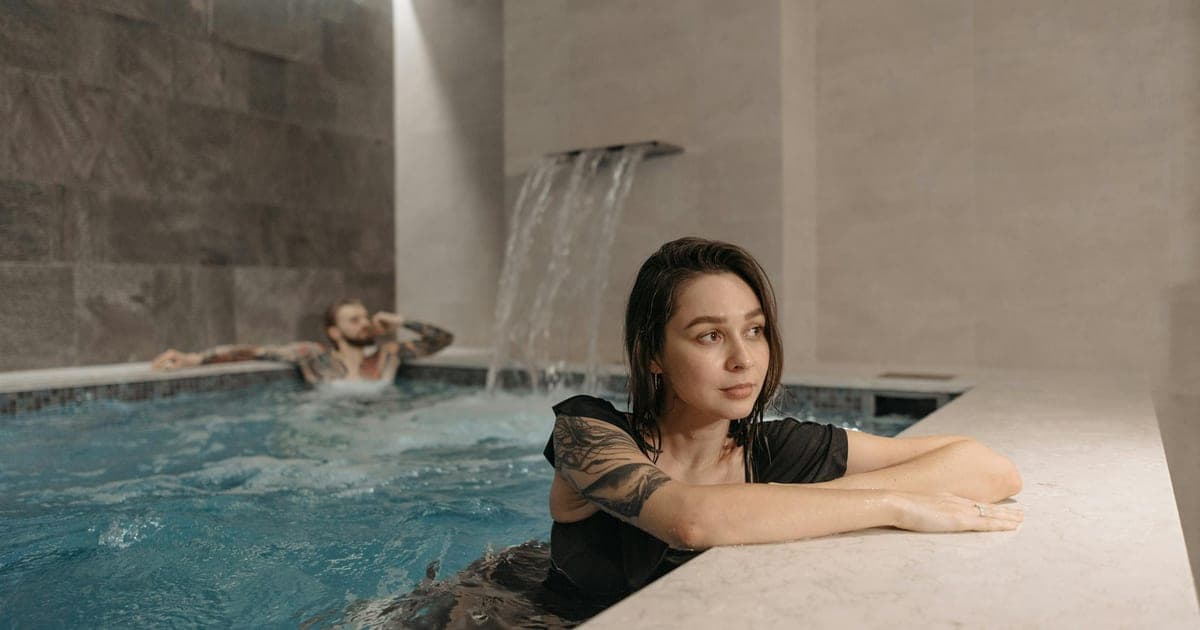
Cold water immersion after lifting blunts the signal your muscles need to grow. On rest days or several hours later, the same plunge does not interfere. The difference is timing, not temperature.
The Short Answer
Skip the cold plunge for at least 6 hours after resistance training. On rest days, plunge freely. The muscle-building interference only occurs when cold immersion suppresses the immediate post-workout inflammatory and hormonal response.
Post-Workout Cold Immersion Blunts Muscle Fiber Growth
A 12-week RCT published in the American Journal of Physiology tracked 21 young men performing resistance training three times per week. D'Souza and colleagues split participants into cold water immersion (10 minutes post-session) or active recovery. After 12 weeks, the cold water group showed altered molecular signaling pathways governing muscle fiber adaptation, including blunted microRNA expression related to fiber type switching.
This was not a subjective finding. The molecular signatures of adaptation were measurably different between groups after three months of the same training program. The only variable was what happened in the 10 minutes after the last set.
The size measurements tell a similar story. A separate 7-week trial split 16 participants into cold water immersion (15 minutes at 10 degrees Celsius after each session) or passive recovery. Fyfe's team found attenuated type II muscle fiber hypertrophy by a difference of 1,959 square micrometers compared to passive recovery, with a large effect size of -1.37.
Strength gains, interestingly, were not affected. You could get stronger while building less muscle, which makes sense when you remember that strength is partly a neural adaptation. Your nervous system learns to recruit existing fibers more efficiently regardless of whether those fibers are growing.
The Fyfe study carries a flag for small sample size (N=16, 8 per group), so treat the exact magnitude with some caution. The direction of the effect is consistent with the D'Souza findings and the broader literature.
The Hormonal Window That Cold Shuts Down
Testosterone drops 10.4% below baseline at 60 minutes after a cold plunge following resistance exercise. That finding comes from a crossover trial with 11 resistance-trained men who did cold water immersion (15 minutes at 15 degrees Celsius) or passive recovery after identical workouts one week apart. With passive recovery, testosterone stayed elevated.
The inflammatory marker IL-6, which plays a critical signaling role in muscle adaptation, told a similar story. The passive recovery group saw IL-6 rise 47.5% at 30 minutes post-exercise. The cold immersion group: 4.9%. That is roughly a 90% reduction in the inflammatory signal that tells your muscles to adapt.
This is a small, acute crossover study with only 11 participants (Earp 2019). It does not prove long-term hypertrophy effects on its own. But it explains the mechanism behind what the longer trials demonstrate. Cold immersion suppresses the exact signals that muscles use to trigger growth: testosterone, IL-6, and downstream mTOR pathway activation.
The inflammation you feel after a hard training session is not damage. It is the signal. Suppressing it immediately after training is like muting the fire alarm while the detector is doing its job.
Rest Days Are a Different Story
Every study showing negative effects used cold immersion immediately after lifting. None of them tested delayed cold exposure 6 or more hours later. The inflammatory and hormonal window that cold disrupts lasts roughly 2-4 hours post-training based on the acute signaling data.
On rest days, there is no post-workout signal to disrupt. Cold immersion on a non-training day carries zero conflict with your hypertrophy goals. If you enjoy cold plunges for stress management, sleep quality, or general recovery, schedule them on days you do not lift.
If you train in the morning and want to plunge in the evening, that likely puts enough separation between the two. No study has tested this exact scenario head-to-head, so the 6-hour window is an inference from acute signaling data, not a proven threshold. But the biology suggests the critical signaling window closes well before the 6-hour mark.
- Blunts type II fiber hypertrophy
- Suppresses testosterone response
- Reduces IL-6 signaling by ~90%
- Strength gains preserved, size gains reduced
- No post-workout signal to disrupt
- No hormonal interference
- Full recovery benefits available
- Zero conflict with muscle growth
How to Keep Your Plunge and Your Gains
Train in the morning, plunge in the evening if you must do both on the same day. Better yet, save cold immersion for rest days entirely.
If you are training primarily for performance or fat loss and hypertrophy is secondary, the timing matters less. Cold immersion does not impair strength gains based on the Fyfe data. Endurance athletes and those focused on recovery between competition events can plunge more freely.
For anyone in Dubai where cold plunge culture is part of the gym scene: use the plunge socially on rest days. Skip it in the 30 minutes after your last set when everyone else is heading to the cold tub. The sauna beside it has its own timing rule, and twenty minutes of heat before you lift costs you reps. Your muscles will thank you on the next DXA scan.
One exception: if you train twice in one day (morning and evening), a cold plunge between sessions may help you perform better in the second session by reducing fatigue. In that specific case, the performance benefit might outweigh the hypertrophy cost. Context matters.
About Be Fit and Strong Evidence-based fitness coaching for busy professionals in Dubai. Built by Mirza.
Looking for evidence-based coaching that works around your life? See how online coaching works.