Pilots Don't Need a Fixed Training Plan. They Need a System.
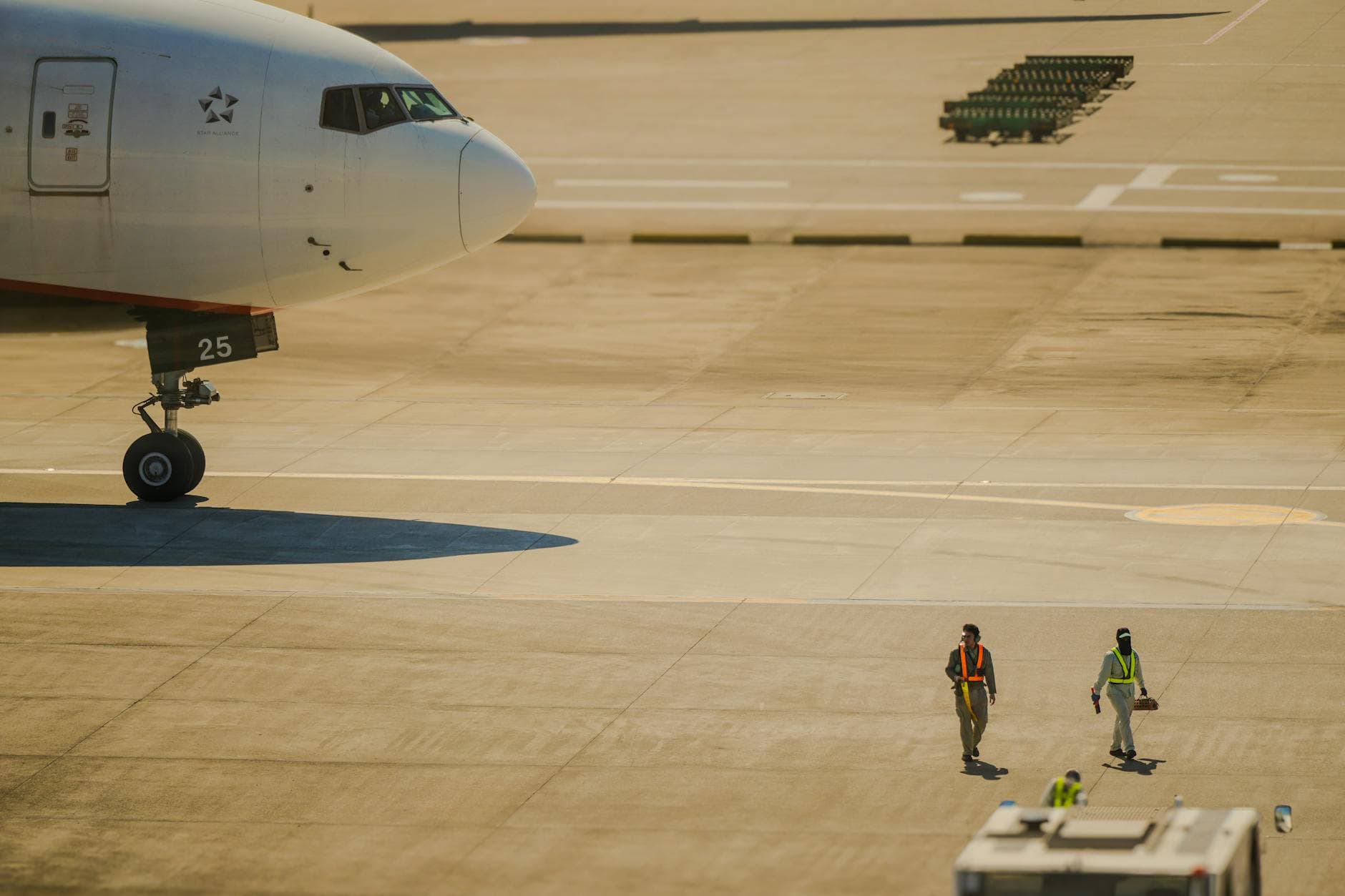
Between 68% and 91% of commercial airline pilots report fatigue during flights. That number alone tells you something important: the lifestyle breaks normal routines. And if your daily schedule can't stay consistent, a fixed Monday-Wednesday-Friday training plan is dead on arrival.
This isn't a generic "how to work out when you're busy" article. This is specifically for pilots (commercial, long-haul, short-haul, rotary) who deal with rotating rosters, timezone crossings, and the unique challenge of never knowing what next week looks like until it's already happening.
The Real Problem Isn't Motivation
Most pilots who stop training don't quit because they got lazy. They quit because their program assumes a stable week. Miss Monday's session and the whole split collapses. Miss two sessions during a 4-day trip and you're "starting over" mentally every time you get home.
The fix isn't discipline. It's a system that doesn't break when your schedule does.
How Rotating Schedules Wreck Training (and What to Do About It)
Three things make pilot schedules uniquely difficult for training:
1. No consistent training days
A roster might give you 3 days home, then 5 days away, then 2 days home. Traditional splits assume you'll train the same days each week. You won't.
The fix: Stop thinking in weeks. Think in training blocks of sessions. Your goal is 3 sessions per block, whenever they happen. A "week" where you get all 3 on consecutive days still counts. A week where they're spread across 8 days still counts.
2. Timezone disruption kills recovery
Crossing multiple timezones suppresses sleep quality. A 2021 review in the International Journal of Environmental Research and Public Health found that circadian rhythm disruption impairs recovery markers including sleep architecture, cortisol patterns, and perceived fatigue. Your body doesn't recover as well after crossing 6 timezones, even if you slept 8 hours.
The fix: After any flight crossing 3+ timezones, your first priority is sleep, not training. Give yourself one full local night's sleep before training. Research from Current Biology shows that morning exercise can phase-advance your circadian clock, helping you adapt to a new timezone faster. So when you do train after arrival, train in the morning local time.
3. Hotel gyms are limited
You're not going to find a full power rack at the Hilton Garden Inn near the airport. Most hotel gyms have dumbbells to 25 kg, a cable machine if you're lucky, and a treadmill.
The fix: This matters less than you think. A 2026 study in The Journal of Physiology confirmed that muscle growth is independent of external load when sets are taken close to failure. You don't need heavy barbells. You need effort. A set of dumbbell Romanian deadlifts at 20 kg taken to 2 reps from failure produces comparable hypertrophy to a barbell set at 100 kg at the same proximity to failure.
The Pilot Training Framework
This isn't a rigid program. It's a framework that survives roster changes.
Structure: 3 Full-Body Sessions Per Block
Full-body training is the most schedule-proof approach for pilots. If you miss a session, you haven't skipped an entire muscle group for the week. Every session hits everything.
If you want to understand why full-body training beats traditional splits for busy schedules, we break that down in detail separately. Here's the short version for pilots:
Session A: Push Focus
- Dumbbell bench press or push-ups: 3 sets
- Overhead press (dumbbell): 3 sets
- Squat variation (goblet, dumbbell, or bodyweight): 3 sets
- Row variation: 2 sets
- Tricep isolation: 2 sets
Session B: Pull Focus
- Dumbbell row or cable row: 3 sets
- Lat pulldown or pull-ups: 3 sets
- Romanian deadlift (dumbbell): 3 sets
- Push variation: 2 sets
- Bicep curl: 2 sets
Session C: Legs Focus
- Bulgarian split squat: 3 sets
- Leg curl (machine or dumbbell): 3 sets
- Calf raise: 3 sets
- Upper body compound: 2 sets
- Core work: 2 sets
Rules:
- Alternate A, B, C in order regardless of when they happen
- Each session takes 35-45 minutes
- All sets to 2-3 reps from failure
- If a hotel gym lacks equipment for an exercise, swap to the closest available variation
- If you only get 2 sessions in a block, you still trained every muscle group at least twice
Volume Check
At 3 sessions per block, you're accumulating roughly 6-9 sets per muscle group per week.
That's above the minimum effective dose for trained individuals. You're not optimizing for a bodybuilding stage. You're protecting progress against the weeks when you only get 2 sessions in.
When to Train Around Flights
Before an early departure: Don't. Sleep wins. A 4 AM alarm to train before a 6 AM report time creates a sleep debt that compounds over a multi-day trip.
On layover days: Train in the morning local time. Morning exercise helps reset your circadian clock after timezone changes, and even a 30-minute session improves alertness and sleep quality that night. This is your best training window on trips. Use it.
On days off at home: Train whenever you normally would. This is your recovery window. Don't waste it chasing extra sessions. Three quality sessions beat five mediocre ones.
After a red-eye: Skip it. Get a full sleep cycle, then reassess. One rest day won't cost you muscle. Training in a severely sleep-deprived state increases injury risk and provides a worse training stimulus anyway.
Nutrition on the Road
You can't control what's available at airports, hotel restaurants, or in crew meals. So keep it simple: one non-negotiable, everything else flexible.
Hit your protein target. For most pilots training 3x per week, that's 1.6-2.2 g per kg of bodyweight daily. The 2025 Dietary Guidelines Advisory Committee nearly doubled previous protein recommendations, confirming what the sports nutrition research has shown for years.
How to make it work on trips:
- Pack protein bars or powder. They're shelf-stable, don't need refrigeration, and save you from relying on whatever the airport has.
- Pick protein first at every meal. Even bad buffets have chicken, eggs, or fish somewhere.
- Forget meal timing on trip days. Total daily intake matters. When you eat it doesn't.
- Drink more water than you think you need. Cabin humidity runs 10-20%. You're dehydrating faster than you realize.
The Consistency Illusion
Most pilots compare themselves to people with 9-to-5 schedules and feel behind. Don't.
| Office worker | Pilot | |
|---|---|---|
| Week 1 | Mon / Wed / Fri | Tue / Wed / Thu (home stand) |
| Week 2 | Mon / Wed / Fri | Sat only (layover gym) |
| Week 3 | Mon / Wed / Fri | Mon / Tue / Thu / Fri (4 days off) |
| Monthly sessions | 12 | 11 |
| Monthly volume | ~108 sets | ~99 sets |
The pilot got 92% of the volume with zero fixed training days. That's not inconsistency. That's a different kind of consistency: never going more than 5 days without a session, accumulating target volume over time, and refusing to restart mentally every time the roster changes.
What an Adaptive System Looks Like
The whole point of adaptive training is that the plan adjusts to your week, not the other way around. If you check in on Monday and say you have 2 days available instead of 3, the system redistributes volume. If you trained yesterday and can train today but not for the next 4 days, it pulls forward what matters most.
That's what the Be Fit and Strong Adaptive Training System does. It was built for exactly this: professionals whose schedules don't fit a template. You tell it what you have. It tells you what to do.
No spreadsheet management. No mental math about which split day you're on. Just a session that makes sense for today, given everything that happened this week.
Use full-body training. 3 sessions per block, in any order, on any days. Think in blocks, not weeks. Your roster doesn't respect the calendar. Neither should your program. Train mornings on layovers. It resets your circadian clock and improves sleep that night. Sleep beats training after timezone crossings. One full local night before you touch a weight. Hotel gym limitations don't matter. Effort drives growth, not load. Take sets close to failure. Hit 1.6-2.2 g/kg protein daily. Pack bars or powder. Don't rely on airport food.
Want a training system that adapts to your roster, not the other way around? [Try the Adaptive Training System free for 14 days.]