How Bad Sleep Costs You Strength and Muscle
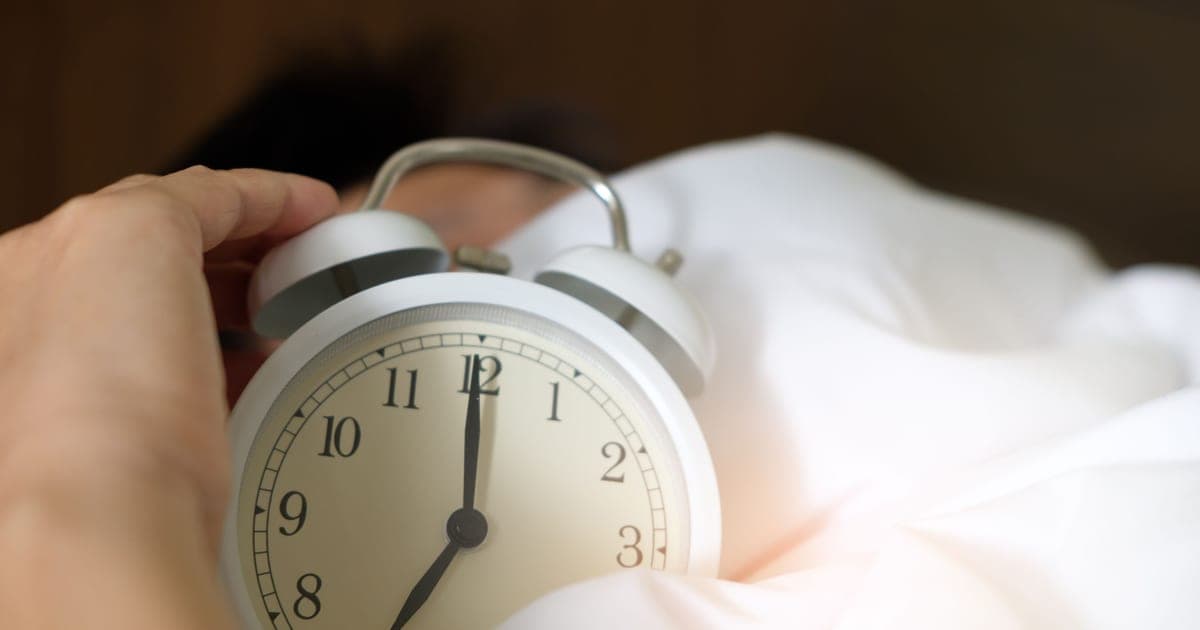
How Bad Sleep Costs You Strength and Muscle
Sleep-deprived training is not just harder. It is measurably weaker. A 2022 meta-analysis of 69 publications found that sleep loss reduces exercise performance by a mean of 7.56%. That is not how tired you feel. That is how much force you actually lose.
The Short Answer
Poor sleep degrades your strength, your training volume, and your compound lift performance more than most people realize. One bad night might not wreck your max. But string together a few short nights and your bench, squat, and deadlift all suffer.
77% of Sleep Studies Found Significant Strength Drops
Easow et al. (2025) published a systematic review in Sleep & Breathing that examined 13 studies with 10,346 total participants. The headline finding: 76.9% of studies (10 of 13) found significant decreases in at least one strength measure following sleep deprivation.
Grip strength decreased 2.7-8.4% after partial sleep deprivation. Maximal voluntary contraction in elbow flexors declined 15-24% when sleep was cut short at the end of the night. These are not trivial numbers. An 8% grip strength drop on a 200kg deadlift means the bar feels like 216kg in your hands.
Every Hour Awake Costs You Another 0.4% of Performance
Craven et al. (2022) ran the numbers across 69 publications and 227 outcome measures in Sports Medicine. The overall effect: a mean 7.56% reduction in exercise performance following sleep loss (95% CI: -11.9% to -3.13%, p = 0.001). Strength was one of the most-studied categories, with 66 specific outcome measures included.
The dose-response relationship is striking. Performance declined approximately 0.4% for every additional hour awake before exercise. If you normally train at 6 PM after waking at 7 AM (11 hours awake), that is your baseline. Wake at 4 AM for an early flight, train at the same time, and you have added 3 hours of wakefulness and roughly 1.2% more performance loss on top of whatever the sleep debt itself costs.
Another finding from the same review: tasks performed in the PM were consistently impaired by sleep loss, while AM performance was largely unaffected. If you slept poorly and have a choice, training in the morning may partially protect your performance.
Compound Lifts Suffer First, Isolation Movements Are More Resilient
Knowles et al. (2018) reviewed 17 studies in the Journal of Science and Medicine in Sport and found a pattern that matters for programming. A single night of total sleep deprivation often did not affect maximal strength during single-joint exercises like bicep curls or leg extensions. But consecutive nights of sleep restriction (3 hours per night for 3 nights) reduced force output specifically in multi-joint compound movements: bench press, leg press, deadlift.
The mechanism likely involves neural coordination. Compound movements require more motor unit recruitment, more stabilizer activation, and more central nervous system output. All of these are sensitive to sleep quality. A bicep curl does not tax your CNS the same way a heavy squat does.
This has a practical implication. On nights when you slept poorly, your training is not ruined, but shifting toward isolation work and machine-based exercises may give you a more productive session than grinding through heavy compounds at reduced capacity.
The Nap Rescue and the Caffeine Mask
One study in the Easow review found that a 1-hour afternoon nap recovered grip strength and bench press power to near-normal levels after partial sleep deprivation. If you had a rough night and can fit a short nap before your evening session, the evidence suggests it helps.
Caffeine and training in groups can partially offset the motivational and perceived-effort effects of sleep loss. But these are masks, not cures. The neuromuscular impairments, the reduced voluntary activation, the lower force production: those have physiological roots that caffeine only partially covers.
If You Average 6 Hours, You Are Leaving Performance on the Table
Most of the evidence comes from 18-30 year olds. The 30-50 professional averaging 6 hours has less direct data, but the physiological mechanisms (impaired neural drive, reduced voluntary activation) do not expire at 30. If anything, recovery capacity decreases with age, making adequate sleep more important, not less.
The practical framework:
Protect your sleep before big compound days. If Tuesday is squat and deadlift day, Monday night is non-negotiable sleep priority. That includes what you drink the night before, where the cost to recovery scales with the dose. A poor night before isolation accessories costs you less.
When sleep-deprived, shift toward machines and isolation. You will still get productive training volume without asking your nervous system to coordinate heavy multi-joint movements on a diminished battery.
Use naps strategically. A 20-60 minute afternoon nap before an evening session can recover much of what a bad night took.
Train in the morning after a bad night if possible. The Craven meta-analysis found AM performance was less affected than PM performance after sleep loss.
About Be Fit and Strong Evidence-based fitness coaching for busy professionals in Dubai. Built by Mirza.
Looking for coaching that adjusts your training around your recovery and schedule? See how online coaching works.
- 1Craven J, McCartney D, Desbrow B, Sabapathy S, Bellinger P, Roberts L, Irwin C (2022). Effects of Acute Sleep Loss on Physical Performance: A Systematic and Meta-Analytical ReviewSports Medicine
- 2Easow J, Bommasamudram T, Munnilari M, Adhikari R, Edwards BJ, Nayak KR, Vaishali K, Ravindrakumar A, Gallagher C, Pullinger SA (2025). Implications of sleep loss or sleep deprivation on muscle strength: a systematic reviewSleep & Breathing
- 3Knowles OE, Drinkwater EJ, Urwin CS, Lamon S, Aisbett B (2018). Inadequate sleep and muscle strength: Implications for resistance trainingJournal of Science and Medicine in Sport