Resistance Bands vs Free Weights Come Out Even on Strength
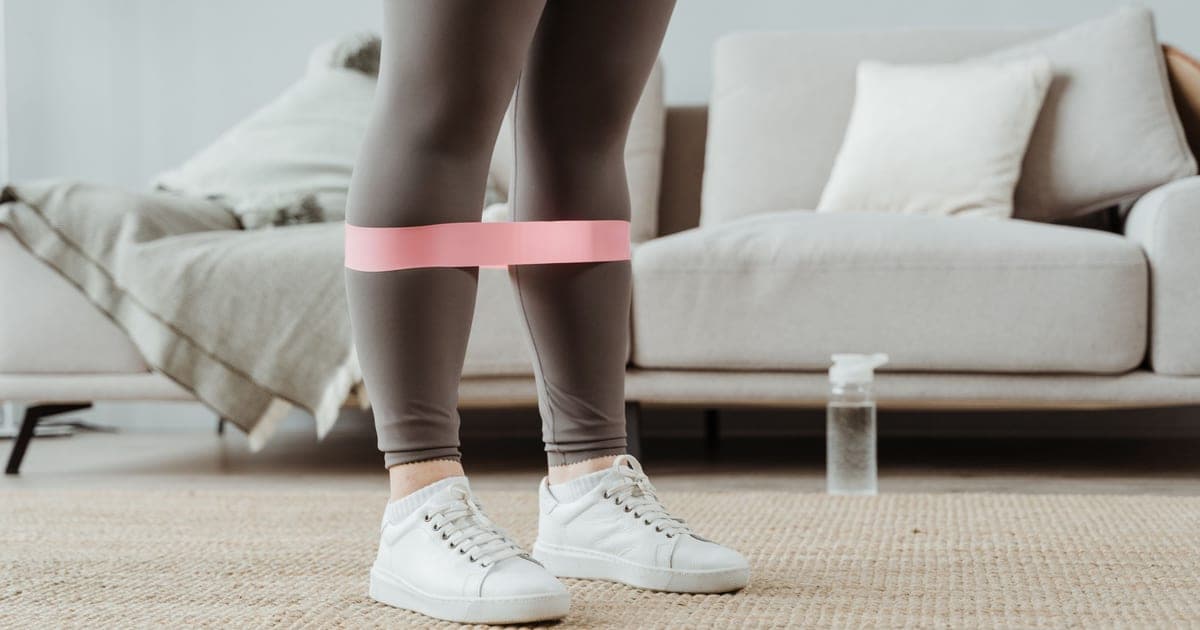
Resistance Bands vs Free Weights Come Out Even on Strength
Eight controlled trials pooling 224 people could not find a strength difference between elastic bands and dumbbells or machines. Upper limb strength landed at p equals 0.48 and lower limb at p equals 0.52, so the week you spend in a hotel room with a band in your suitcase is not the write off you have been told it is.
The Short Answer
For strength, a band week is a real training week. Be precise about the boundary though, because it matters: that pooled evidence measured strength, not muscle size, and it was collected mostly in older, untrained and clinical populations rather than in trained lifters. Where a band genuinely falls short is at the top end of loading, where getting stronger depends on weight above 80 percent of your one rep max and a band cannot tell you what percentage it is delivering.
Eight Trials in 224 People Found No Strength Difference Between Bands and Weights
SAGE Open Medicine published the pooled comparison in 2019. Eight studies, 224 participants, elastic tubes and Thera-Bands set against weight machines and dumbbells, with interventions running 4 to 12 weeks. Neither region of the body separated. Upper limb muscular strength came in at p equals 0.48. Lower limb came in at p equals 0.52.
Two hundred and twenty four people across eight studies is a thin evidence base, and the authors say so plainly. They also flag the measurement problem that runs through this whole literature. There is no standardised way to express how much load a band is actually delivering, which makes matching effort between the two conditions harder than matching a barbell against a machine.
So read the result for exactly what it is. A null from a small pool is a failure to detect a difference, not proof that none exists. It is also the best direct answer anybody has produced, and it points the opposite way to what most gym conversation assumes.
The Comparison Trials Ran in Patients and Pensioners, Not Trained Lifters
Look at the population list and some of the confidence drains out. The pooled sample spans ages 15 to 88 and includes sedentary adolescents, physically active adults, high performance athletes, coronary heart disease patients and people with moderate COPD.
The most recent head to head does not fix that. A 2025 randomised trial in the Journal of Bodywork and Movement Therapies ran in older adults rather than trained lifters and analysed only 29 people over 8 weeks, and it found no significant difference between free weights and elastic resistance on knee extensor strength, knee flexor strength or functional performance, with both groups increasing their training loads over the eight weeks.
There is a reason the literature looks like this. Bands get studied where they get used, which is rehabilitation, cardiac and pulmonary programmes and older adult care, because they are cheap, portable and easy on joints. Almost nobody funds a trial that puts bands against barbells in trained lifters. The population skew tells you where bands get studied. It does not tell you what they can and cannot do.
That objection is still correct and it should change what you claim, not just how loudly you claim it. What this evidence supports is that a band week is not a wasted week. It does not establish that a trained 35 year old chasing a bigger squat will progress the same way on bands. Nobody has run that trial.
Muscle Size Is Forgiving About the Tool, Top End Strength Is Not
The largest prescription synthesis in the field tells you where the equivalence should be expected to hold and where it should break. A Bayesian network meta-analysis in the British Journal of Sports Medicine pooled 178 studies and 5,097 participants for strength and 119 studies and 3,364 participants for muscle size. For strength, prescriptions using loads above 80 percent of one rep max maximised the gains. For muscle size, every prescription tested promoted growth comparably, every one of them beat control, and the authors report the finding held up under threshold analysis.
Put that in equipment terms. Muscle growth barely cared which combination of load, sets and frequency it was handed, which is the reason to expect it not to care much about which handle you were holding either. Strength did care, and it cared about the one variable a band cannot report. There is no clean way to express band tension as a percentage of a one rep max, which is the same standardisation problem the pooled bands trials flagged from the other side.
Be honest about the shape of that argument. No meta-analysis has compared bands with free weights on muscle size. The size case for bands is inference from two directions, the strength equivalence plus the flatness of the hypertrophy field, and inference is weaker than a measured head to head result.
- Strength work at moderate loads, where 8 pooled trials found no significant difference
- Muscle size, by inference from a field where every prescription grew muscle comparably
- Higher rep work for arms, delts, calves and rear delts
- A hotel room, a suitcase and 40 minutes
- Loads above 80 percent of one rep max, which is what maximised strength gains
- A load you can measure, write down and add to next week
- Tension in the stretched position, where elastic resistance is at its lowest
- Finding out where your actual strength sits
A Band Cannot Load the Stretched Position the Way a Bar Can
This part is mechanics rather than trial data, and it should be labelled that way. Elastic resistance rises as the band stretches, so tension is lowest where the muscle is longest and highest where it is shortest. A dumbbell fly loads the chest hardest at the bottom. A banded fly loads it hardest at the top. Nothing in the comparison literature measured band tension across a range of motion, so treat this as a property of elastic material and not as a measured finding about muscle growth.
It changes exercise selection more than it changes whether the week counts. Lean a band week on pressing, rowing, squatting and hinging patterns, where the resistance curve and your strength curve argue with each other less than they do in a fly or a pullover. Save the fly variations for the week you are back under real iron.
Run the Band Week Like a Real Training Week
Coaching practice from here, not trial data, because no study in this evidence base tracked how anybody progressed on bands across months.
Pick a band that puts you into a genuinely hard set somewhere in the 8 to 15 rep range on every movement, and take those sets to within one or two reps of failure. Effort is the variable these trials matched between conditions, and it is the one variable you fully control in a hotel room.
Progress in this order. Add reps first. Then shorten the band by standing wider on it or choking up on the handle. Then add a second band. Write down which band and which foot position you used, because a band week you did not log is a week you cannot repeat, let alone beat.
For the movements themselves, a band week covers more than people expect. Anchor the band in a door and you have a row, a pulldown, a chest press and a face pull. Stand on it and you have an overhead press, a curl, a triceps extension and a lateral raise. Loop it above the knees and a split squat, a hip thrust and a Romanian deadlift all get hard enough to matter. The gap is not the number of movements available to you. It is how heavy the heaviest of them can get.
Keep your weekly set counts where they normally sit. The targets in the ACSM position stand on resistance training do not move because your equipment did.
Then test your heavy lifts when you get back in the gym instead of assuming they survived. Top end strength is exactly where this evidence is thinnest, so measure it rather than trusting it. And if your weeks scatter like this by default, training around an unpredictable schedule is the bigger problem to solve than which equipment you happen to own.
About Be Fit and Strong Evidence-based fitness coaching for busy professionals in Dubai. Built by Mirza.
Want a training plan that rewrites itself for a hotel room instead of leaving you to improvise? See how the app works.
- 1Lopes JSS, Machado AF, Micheletti JK, de Almeida AC, Cavina AP, Pastre CM (2019). Effects of training with elastic resistance versus conventional resistance on muscular strength: A systematic review and meta-analysisSAGE Open Medicine
- 2Ferreira RZ, Souza Gomes AF, Ferreira Baldim MA, Alves RS, Carvalho LC, Simao AP (2025). Effects of strength training with free weights and elastic resistance in older adults: A randomised clinical studyJournal of Bodywork and Movement Therapies
- 3Currier BS, McLeod JC, Banfield L, Beyene J, Welton NJ, D'Souza AC, et al. (2023). Resistance training prescription for muscle strength and hypertrophy in healthy adults: a systematic review and Bayesian network meta-analysisBritish Journal of Sports Medicine